
“The journey of a thousand miles begins with one step” – Lao Tzu
13 weeks
9,000 miles
300 hours of driving
35 setups & packdowns
26 National or State Parks
Through the looking glass of the Blog posts and videos posted to friends and family on Facebook, we’re sure that our three month road trip in the USA looks to be a continuous and idyllic adventure, and for the most part that’s been pretty true, but everything you do in life has a cost, both in financial, social and personal domains. So what does it take to invert your lives and turn your weekends into weeks?
1. Feel the fear and do it anyway
Firstly, you will need to learn to be comfortable with uncertainty. Having packed in our jobs to take this hiatus there is a degree of discomfort on the career front. Will we find employment quickly at the end of this all? How will future employers view this dreaded “gap in the CV”? Stepping out of the certainty of established careers to take a break is indeed a bit discomforting, but interruptions to careers happen all the time, whether we plan it or not. Redundancy, re-sizing, the birth of a child, global financial crisis or even natural disasters can occur anytime along your career path.
When it’s sudden and unplanned, panic mode kicks in and most people focus on instantly regaining employment (we would too!). By firing yourself on a carefully planned and controlled timeframe, you can manage the risks and plan to save in advance for what you will need (more on that later).
We are both interviewing on the road for jobs back in New Zealand, and Michelle has already landed one for when we return. Employers are not put off by “the gap”. The interviewers are of course human, and most have their own dreams about taking time away from employment, either before or at retirement. Demonstrating that you are not afraid to step out of the normal flow of life, and to take moderate and measured risks to achieve your life goals is a positive, not a negative in the eyes of prospective employers.
2. What’s your plan, Stan?
While the career and money sides are of course important, being in control of your timeframe is more critical. Planning your exit and re-entry strategy early will make a difference into how much you will enjoy your time on the road. Travelling full time is tiring. Long days exploring new places, hot weather, high altitude and interrupted sleep patterns are all par for the course. Layer on lots of small and large worries and you will ruin your ability to be in the now and experience the moment.
Some people have the carefree ability to not worry at all about the future. Life just happens to them; sometimes for the worse, sometimes for the better. Try as we might, we are not those people. For us, being on the front foot, especially for the larger picture issues and events, is important. That way, you can plan and book major attractions and sites well in advance, giving some structure and dependability to the sojourn. You don’t need to plan everything down to the last second, but having some anchor dates and locations to thread between will make a big difference.

Plan for un-planned events too. Having some flexibility in between major points will help you soak up the unexpected events, which will happen! Having to exit the US into Canada to trigger a visa extension, an 800 mile day trip to sort out a ridiculous vehicle licensing issue, and nails in the tires are some of our collective lowlights.
3. School’s out for summer (not forever, sorry boys!)
With seven and eleven year old boys in tow, maintaining schooling is a consideration. In the Midwestern US, we were used to an abnormally long (and completely unjustified) three month summer break – a tradition that goes back to farming days so that the kids can help on the farm. With the New Zealand and US school calendars out of whack, we were faced with a 4 1/2 month break from formal schooling.

The solution? Turn everyday into a field trip! The National Park Junior Ranger programs are incredible, with every park having workbooks, lectures and museums to explore and learn about geological, biological and astrological phenomena. We are big fans of experiential learning, and scrabbling around on rock faces with your fingers on fossils is high quality learning. The boys do their own “Junior Ranger Report Team” blogs, posted on this site, and are learning how to craft their experiences into stories.
We also have school workbooks for mathematics that the boys do during our hundreds of hours of driving to ensure that they will be at the right level when they re-enter formal schooling. After days of staring forlornly out the Ohio public school windows, getting out into the wilds and having everyday as a learning adventure has been fantastic for the boys. Seeing them develop a real love for the natural world, and to proactively defend it by picking up trash and admonishing other kids who lack respect for creatures and environments, has been truly rewarding.
4. Money makes the world go round
We set out with a daily budget of $100 in mind for food, fuel, accommodation and entertainment. This was roughly 2/3rds the normal cost of running our suburban life household. Nearing the end of our trip we are sitting at $112. Petrol has been more expensive on the west coast, and we have used more of it than anticipated, averaging 11.5 miles per gallon while towing up and down the 8,000 foot elevation changes. 2 Minute noodles for lunch and instant coffees help to contain costs, along with avoiding eating out for the most part. Pack your lunch to save a bunch too when out exploring.
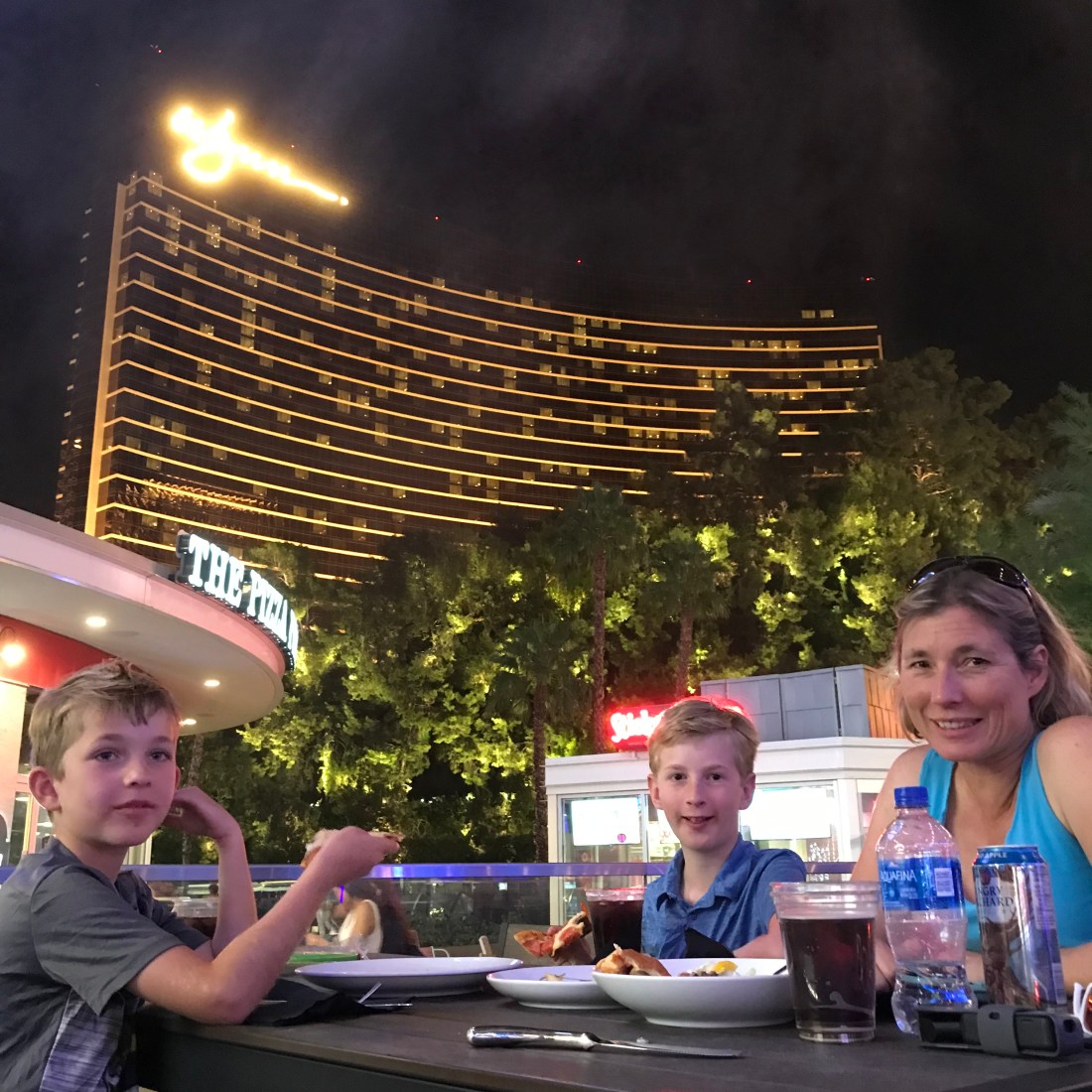
Cities are expensive to visit and we have deliberately limited the amount of time spent near major metropolitan areas. The best times have had have been when we paid $25 or less for a site anyway. We could have done things cheaper, by camping overnight at Walmart, or going off-grid for free camping on public lands, but we are still pretty happy with the result. It’s easy to blow five grand on a winter holiday to somewhere warm for a week, so to have 3 months of adventures for just double of that is great value in our books.
5. Social-lites
Perhaps the biggest give away is the chance to be with friends and family. On the road, you can feel a bit like a social satellite; a bright light being observed from afar. Facebook, Skype and WhatsApp can close the gap a bit, but there’s no real substitute for sharing stories and experiences with your inner circle over good food and drinks. There are plenty of opportunities for instant friendships with fellow travelers, but these are made and lost quickly; the brevity and immediacy of the moment being the common bind. Paradoxically, you are possibly the most interesting to friends and family as you orbit around on your adventures, posting tidbits of intrigue to keep then up to date.

All that being said, the million dollar question is “would we do it all again?”. The answer, most definitely, is “Yes!’…in a little while. We might tweak some things here and there, but overall this has been an amazing privilege to experience together as a family, and as individuals.
If you have a similar urge at the back of you mind, we encourage you to start planning some scenarios early. By dreaming big and acting small you’ll be surprised what you can achieve!
 Light Your Fire!
Thanks so much for including the time to involve family and friends in your great adventure. It’s certainly true that you raise your social desirability by creating an audience adicted to the next episode….we do however ,look forward to an endpoint back here in little ol NZ. In the meantime,carry on camping!!! Much love G and J
LikeLike
Hi Julian – sounds like a wonderful family trip and from my own experience (sailing Canada to NZ and meeting lots of families with children) I think it will be a real family highlight. Good on you. Paula (ex Dynamic, now retired)
LikeLiked by 1 person
Thank you for treating us (our country) so kindly. I hope to tour NZ someday as everything I have read and the natives whom I have encountered make it out to be a magical place.
fran
LikeLike