Cascade Escapades

Being from the South Pacific, we are well versed in the volatile volcanic “ring of fire” that encircles the greater Pacific, and which acts as both creator and destroyer of landscapes. Evidence of this geological phenomenon is everywhere up and down the Pacific Northwest coastline, like frames from a stop-motion animation.

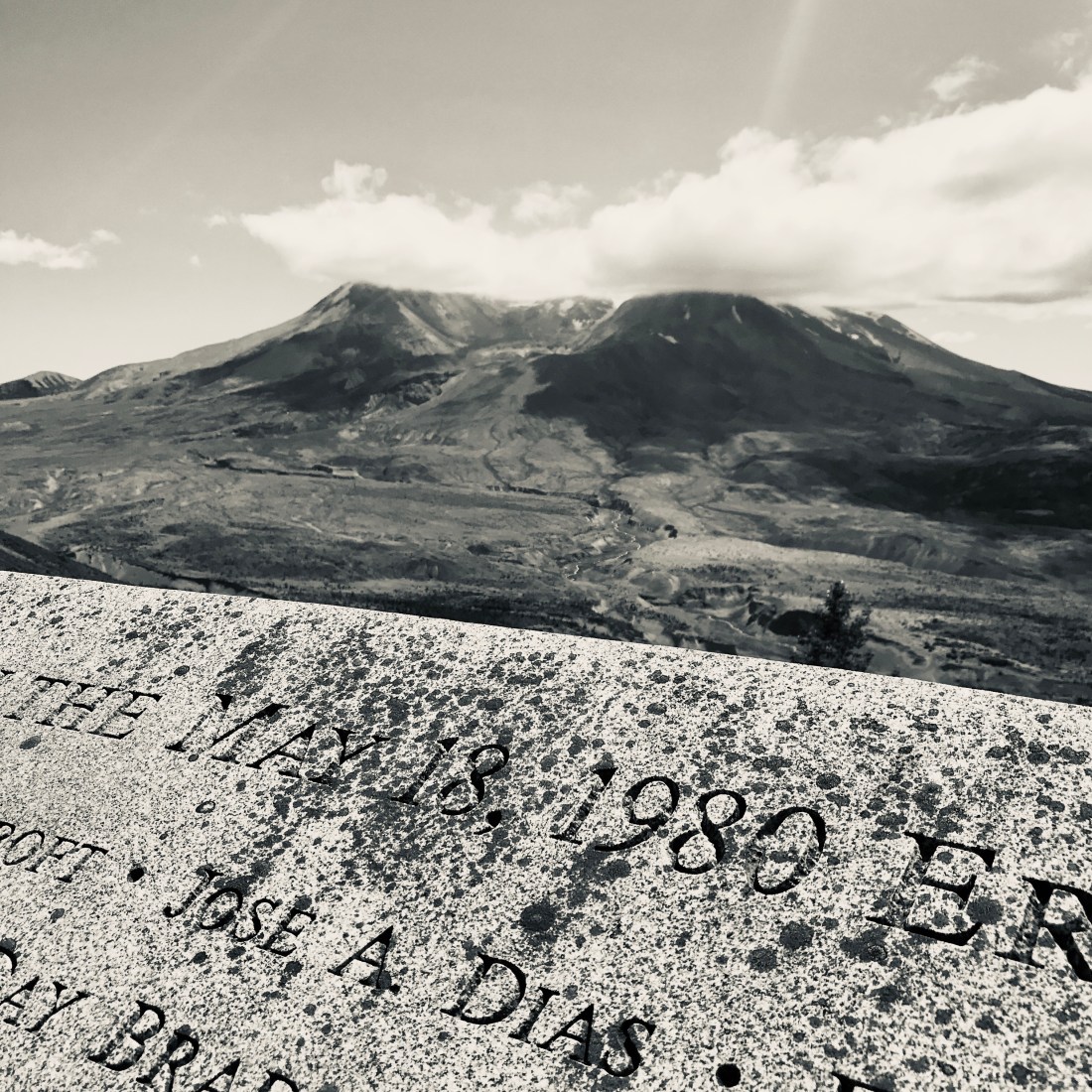
The most recent action is of course to be found at Mount Saint Helens, the scene of a spectacular demonstration of mother nature’s impressive firepower. On a clear, calm morning in May 1980, an earthquake triggered a massive landslide on the north west face of the mountain. Intense pressure from the underlying magma had been bulging out the side of the mountain for weeks, adding up to five vertical feet to the mound each day.
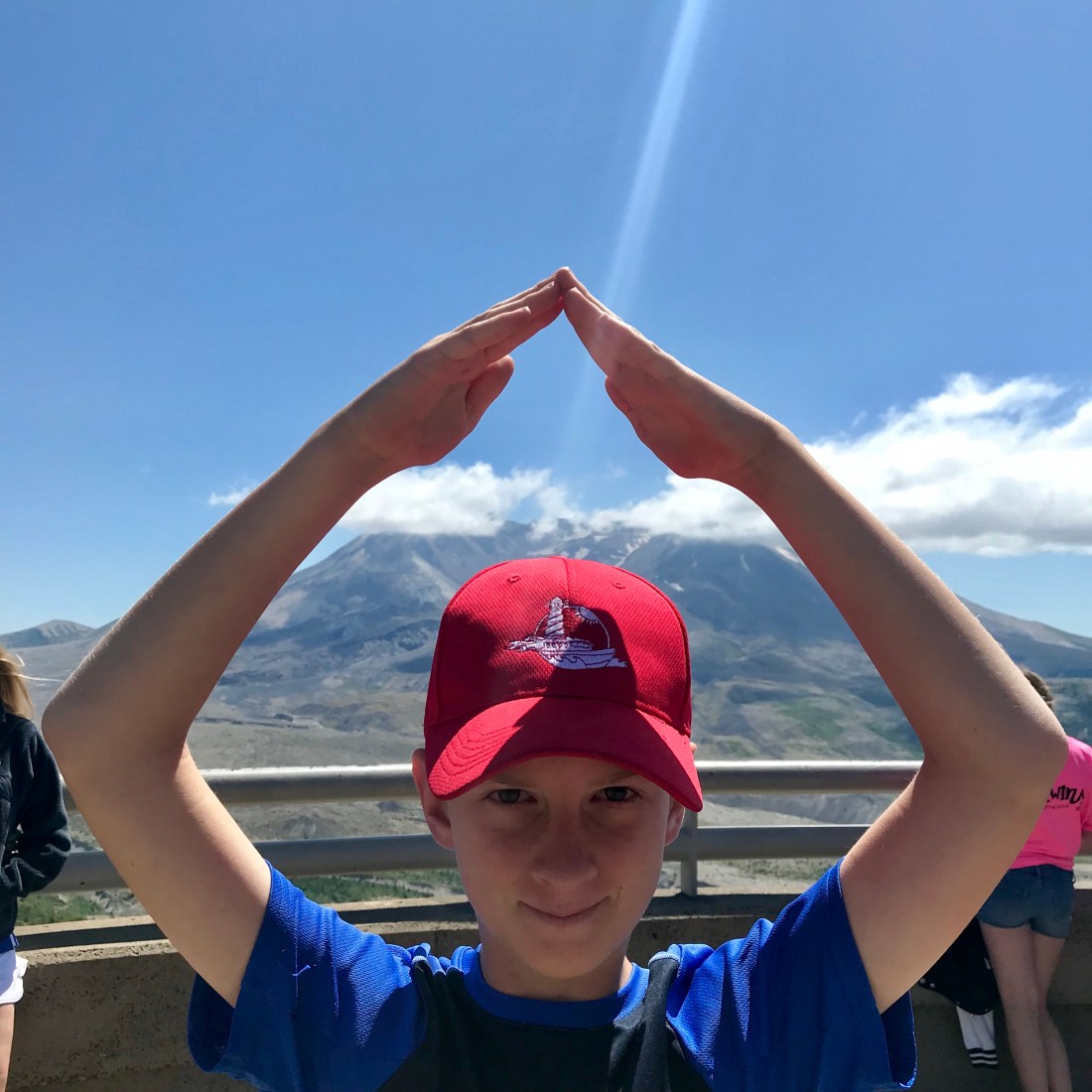
“Where did the mountain top go?!”

The volcanologists, reporters and campers in the area prescribed to the prevailing wisdom of the day that mountains explode upwards, not outwards. Saint Helen had other ideas and wrote a new chapter in our knowledge by exploding violently sideways, sending blasts of gas, rock, ash and lahars across the valley at unprecedented speeds. Forty seven souls bore witness to the event but never survived to tell their tales. Walking through the acres of hummocks strewn through the valley floors, you can literally be standing on what used to be the mountain top, and try to imagine the horror and awe of that day.
Sobered, we move south to explore other geological wonders born from extreme violence. The most unique of these is Crater Lake, whose collapsed caldera creates the deepest lake in America at 1,949 feet (595 meters). Rainfall, combined with more than forty feet of annual snowfall fill the void with unbelievably clear water. The resultant hues range from iridescent blues on the shorelines through to the inky black of the depths.
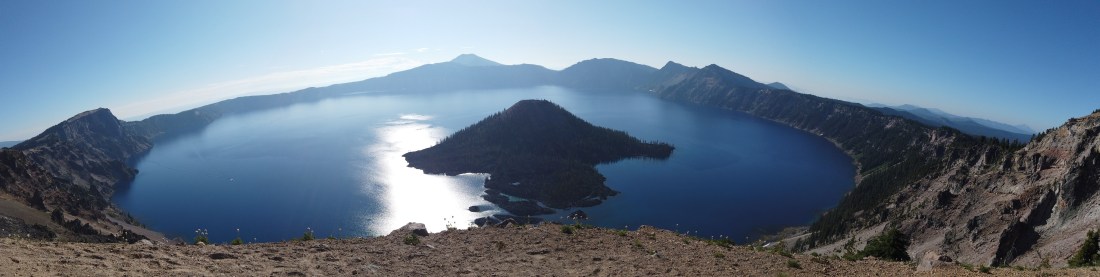
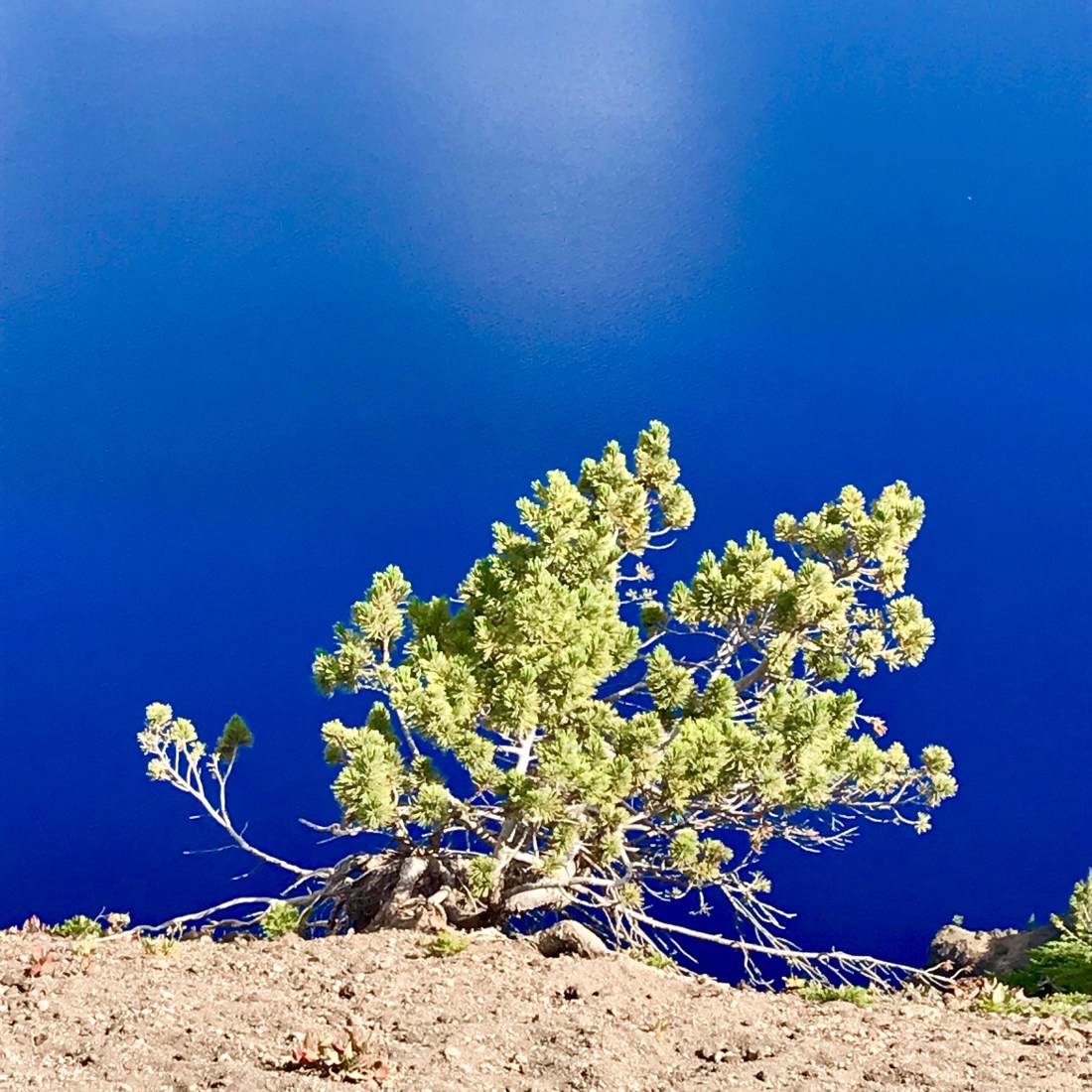
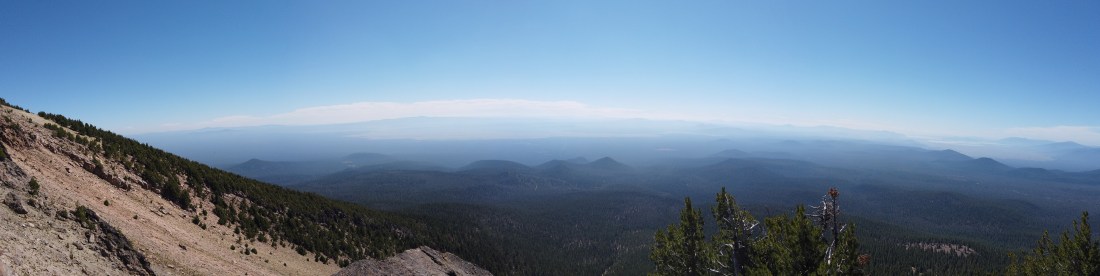
Having a Scott in our party, we are obligated to launch a mission up Mount Scott, which rises over the eastern rim. Winding up through the pumice filled valleys we summit the 8,934 feet (2,723 meters) and soak up the panoramic views over the lake, and the Shasta – Trinity ranges to the south. Smoke from active forest fires renders the rolling terrain in blue chromatic layers.

The true adventurists hike the Pacific Crest Trail, which traverses for thousands of miles down the western side of the continent, from Washington to Mexico. Lean, ragged and sun tanned from weeks, or months on the trail, this mobile community on personal quests stands out starkly from the comfort campers, who are largely living their Netflix lives from the cocoon of their oversized fifth-wheelers.

We are bi-pedal; born to move and evolved over millions of years to efficiently ambulate. Wherever you are right now, take some time to get outside and immerse yourself in the precious few zones that humans have not developed to death. Breathe clean air, swim in clear waters and remind yourself what life is intended to be.
North by Northwest

We now have a problem – have we peaked too early? Or seen the main acts before the warm up artists have even hit the stage? Yellowstone and the Grand Tetons have somewhat reset the “what’s impressive” scale. Yet, they have their own peak season foibles and blunders, with the large pack crowds buzzing around scenery like flies around a dumpster. We decide to ‘indie’ for a while, to check out the quieter, less frequented drawcards on our way northwest.

Craters of the Moon – Idaho
Craters of the Moon

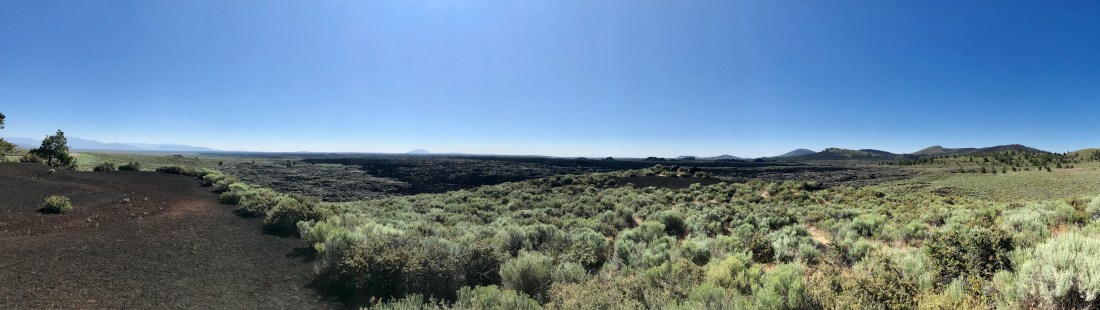
Weaving your way southwest through Jackson, you quickly leave the towering Tetons behind and find yourself on vast, open plains. The landscape is a blur of silver-green sagebrush being swept past, like a painters fluid brush strokes on canvas. Just as you are being lulled to sleepiness the landscape changes in an instant. Thousands of acres of black volcanic flow are frozen in perpetuity as they snake their way across the plains. The presence or absence of lichen, grasses or small undergrowth helps to codify the age of each flow, and paints subtle hues across the panoramic scene. It is quiet, and leaving the mobile phone mad mobs behind for a while is starting to look like it was a great idea.

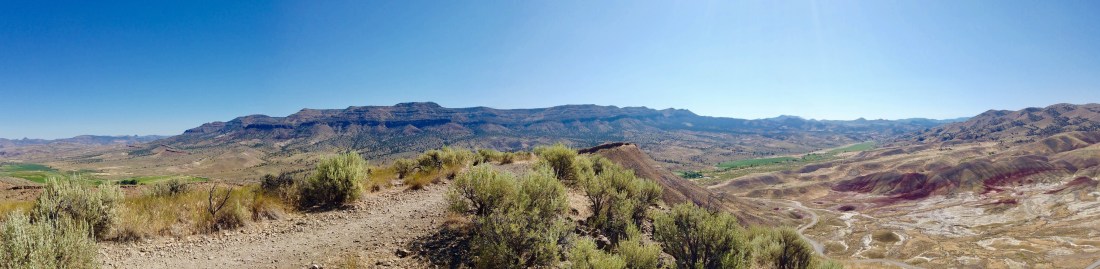
John Day Fossil Beds – Idaho

After enjoying a couple of days of fantastic hospitality with long-lost cousins Bernie & Dale Verkaaik in Eagle, and falling in love with their charming chihuahua Olivia, and her very wary mate Sandy, we head west once more for an even quieter scene. Named somewhat bizarrely after an unfortunate trapper who got mugged of everything (including his underwear), the John Day Fossil Beds are effectively a library of every epoch of North American flora and fauna after the age of the dinosaurs. Continental America used to be split in two, with the ocean going from the Gulf of Mexico all the way up Canada. The emergence of the great divide pulled these lands up, drained the oceans and set in motion a cycle of evolution and destruction, as age after age of forests and creatures arose and thrived, only to be wiped out by pyroclastic flows from the volcanic villains that lurk nearby.

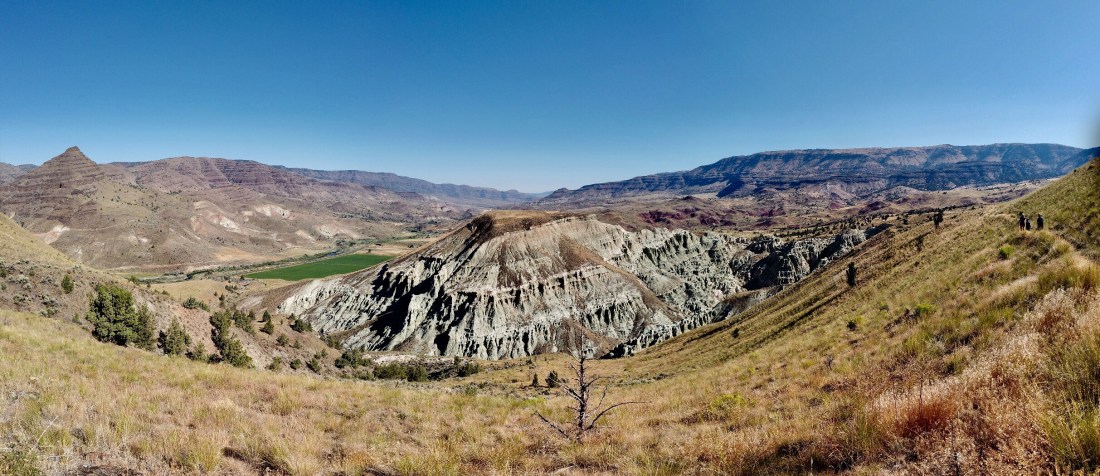
Sheep Rock Overlook

This is heaven in earth for palaeontologists, who can almost sit and wait for each rainfall to expose more of the underlying fossil records stacked neatly within each distinct layer of soil. For our aspiring Junior Rangers, the steep bluffs overlooking these entombed millennia’s are an adventure to explore and learn from. Having a classroom without walls is starting to have some appeal.

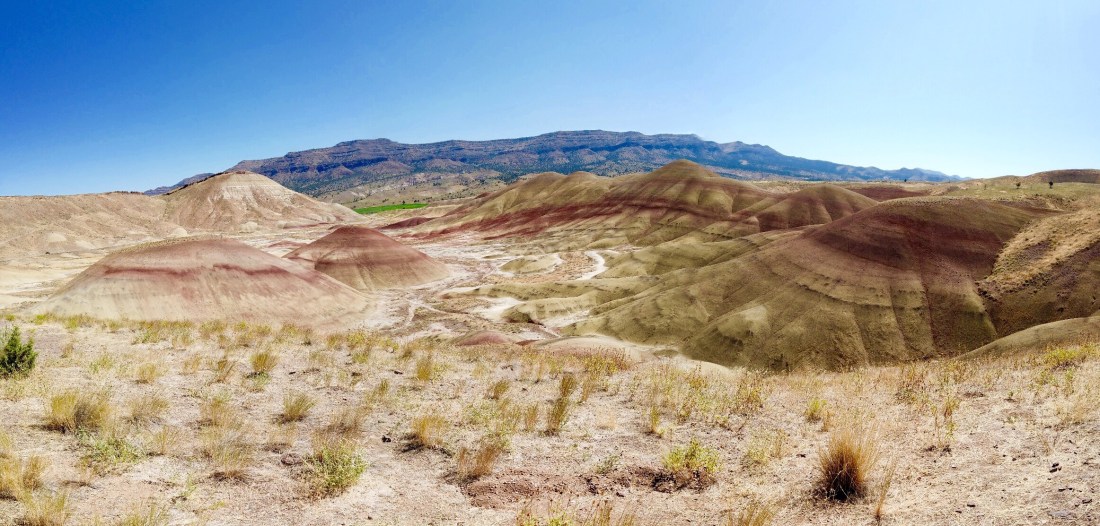
The Painted Hills
Mt Hood – Oregon

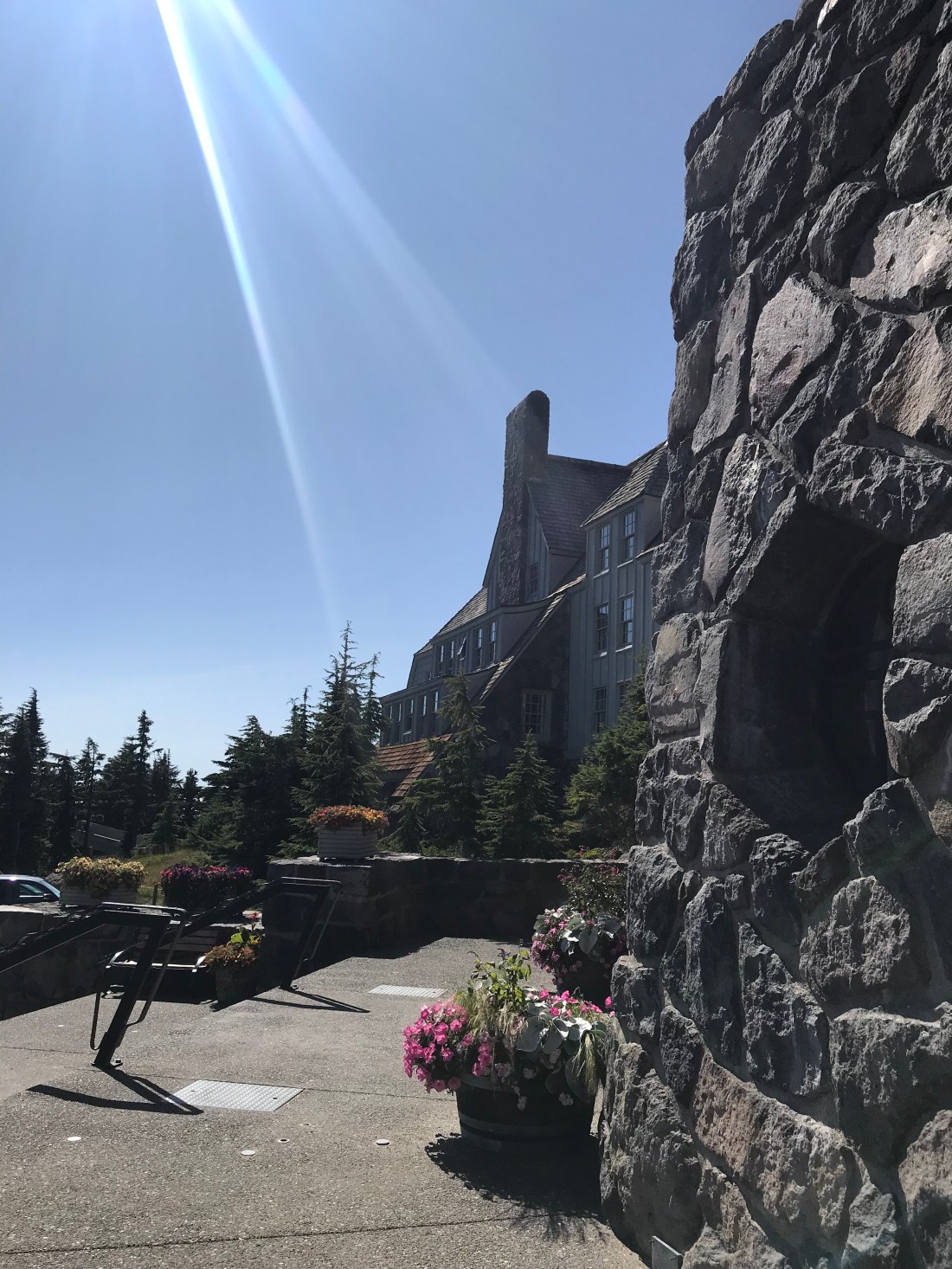
To break from the heat of the exposed ravines and hills, we continue west for the beacon that is Mt Hood. The conical shape of this mountain immediately brings to mind Mt Taranaki (Egmont) from our homeland in New Zealand. Surveying the scene from the hand hewn Timberline Lodge reveals a great playground, with unlimited opportunities for hiking, biking or even a spot of mid-summer skiing.

Timberline Lodge

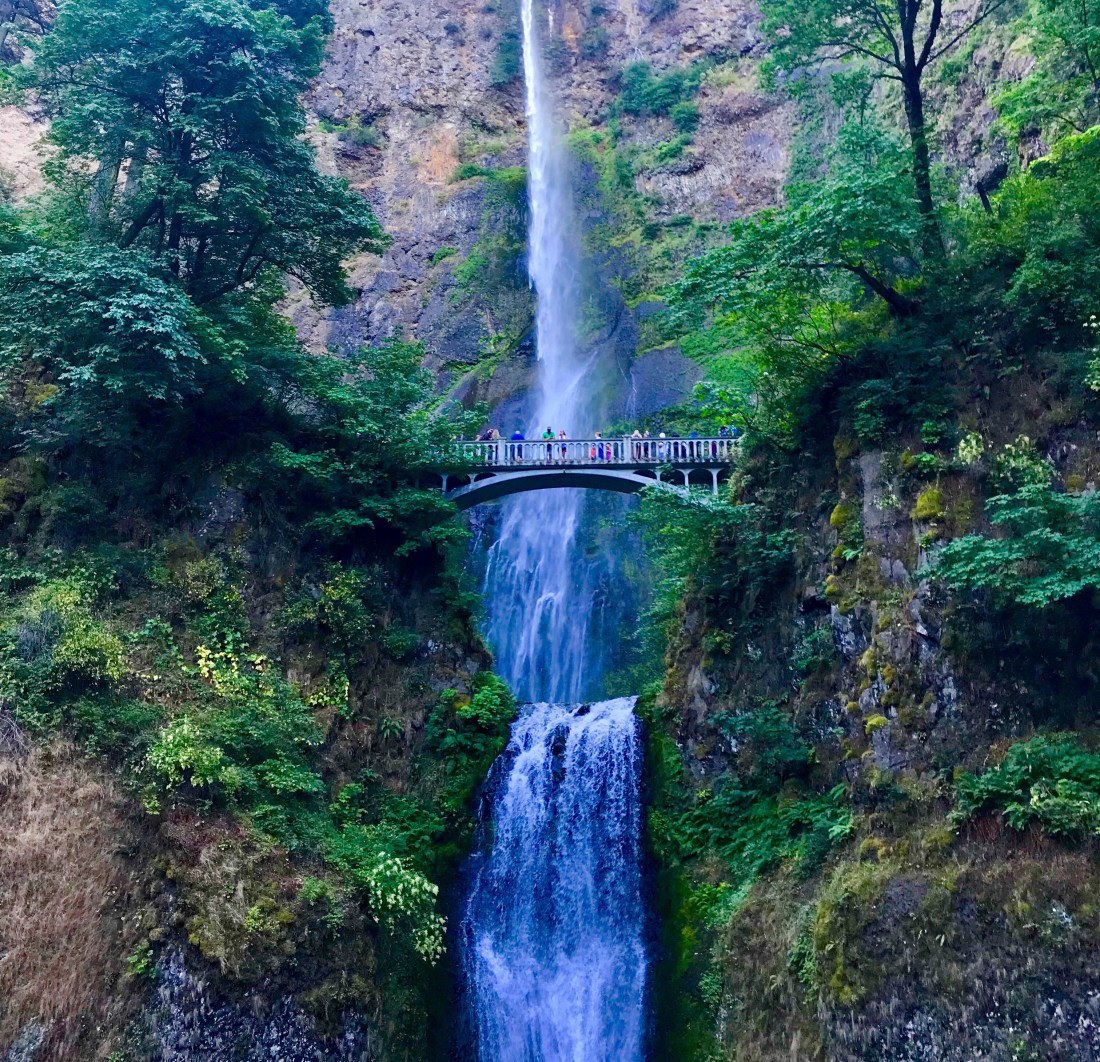
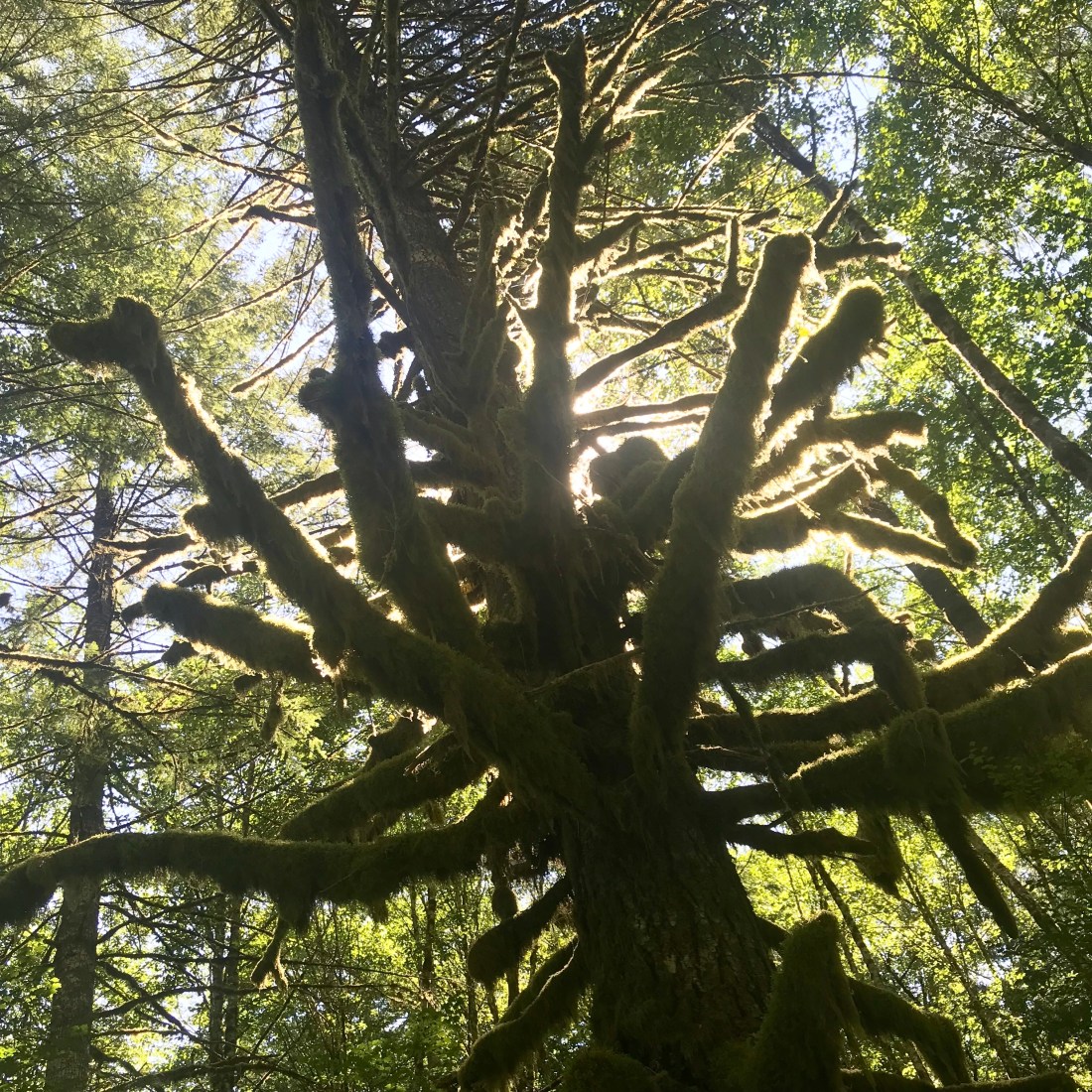
Disappearing under the forest canopy, you discover a rich biodiversity dripping in moss and carpeted with coniferous leaf fall. These trails are a dream to run on, with smooth, cushioned tracks that weave through clear stream valleys full of life. Waterfalls abound, with Multnamah being the main star of the show as it cascades down 620 ft like a veil in perpetual motion.

Multnamah Falls
Mt Hood Temperate Rainforest

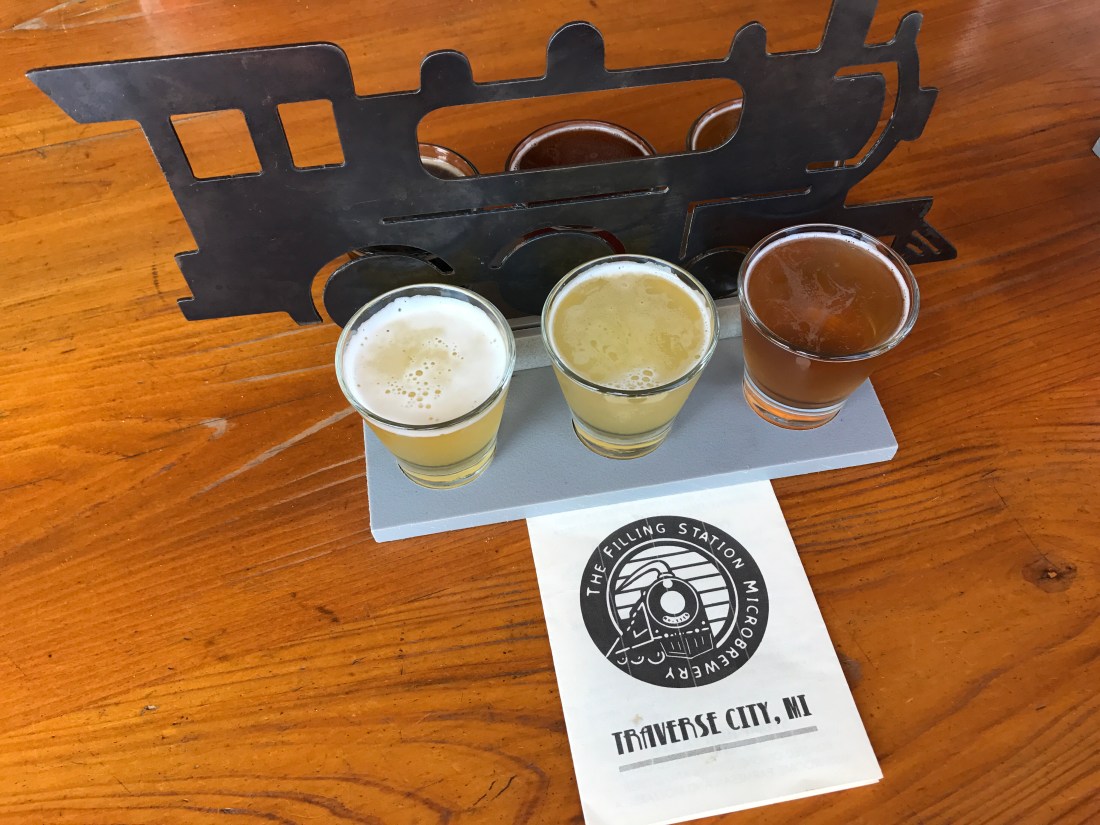
Refreshing ourselves with a beer flight at Full Sail Brewery at Hood River (‘nobody mention Mum’s parking ticket, ok boys?!”) we start to think that this whole life-on-the-road scenario has some real attraction. It’s days like these that justify the long miles and slightly cramped confines of our 18ft home on wheels.

Under star filled skies we fall asleep wondering what new discoveries and adventures await tomorrow.

10 things we will miss about America

We have had many great experiences in our three years in the US, some we will not miss (i.e pointless gun violence, relentlessly disjointed state and federal bureaucracy, and sensationalism driven politics), but there are many elements that we will:

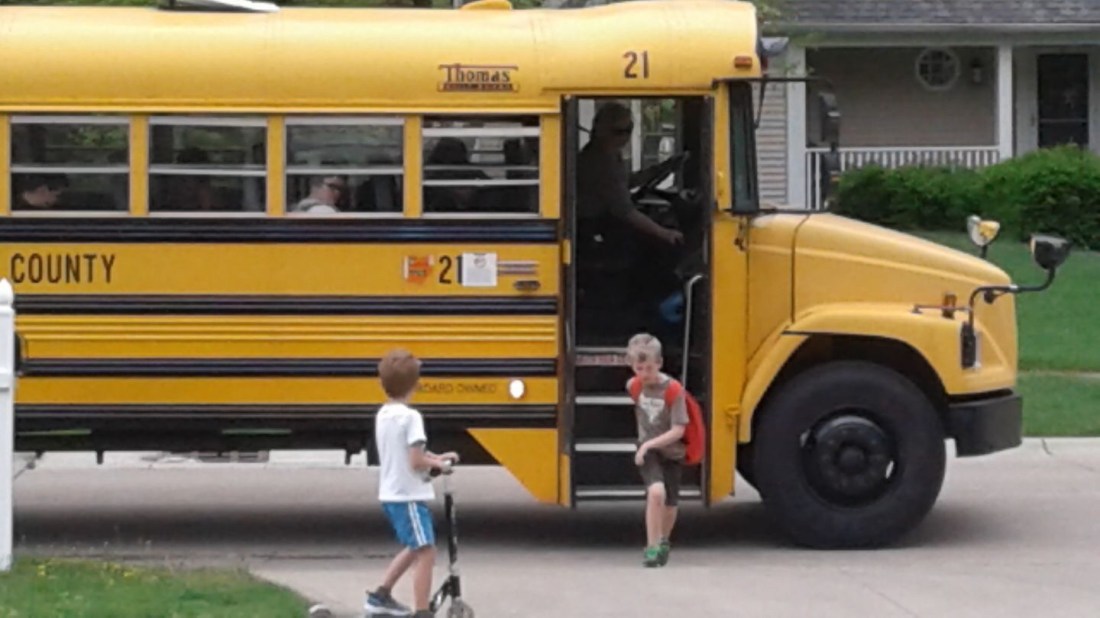
# 1; School Buses

The ubiquitous yellow Thomas buses that feature in so many American movies are a very much a real part of the daily cycle of life for Americans. Having your kids trundled to or from school, in all weathers, can make a big difference to the efficiency of the daily family routine.

#2; The Free Righthand Turn

This is a biggie. Being able to slide through when there is no other turning or through traffic is a dream. It’s not so good as a pedestrian however, as many drivers are looking over their left shoulder and do not notice that you are trying to cross the road!

#3; Moving aside for Emergency Vehicles

Having both sides of the road clear for emergency vehicles is simply a great idea that works for everyone concerned.

Everyone makes way for the Lorain County Special Response vehicle!
#4; Avenue & Street Numbering Systems

Alphabetical avenues that tangent to sequentially numbered streets makes way-finding a breeze in unknown locations. Not just confined to the big cities, this city planning technique can sometimes be found in the smallest of towns in the middle of nowhere.

#5; Respect for Elders

While not universally true, in general I would say that elders were shown more respect here in the US than at home. Perhaps this is more a mid-west attribute than on the coasts, but it was good to experience none the less.

#6; The eternal Highway System

Mile after mile of smooth, bumpy or downright lumpy asphalt with at least two lanes in each direction makes for easy hour-after-hour driving. Traffic flows, even with the random adjustment of legal speed limits as you pass through the various jurisdictions that claim each section.

#7; Craft Breweries & Ice Creameries

After decades of gross monopolisation, the brewery scene now truly belongs to the hundreds of passionate and dedicated brew masters, each with their own spin and personality in their product. The ice cream scene is similar, and Mitchell’s Ice Creamery may be the best we have tasted on the planet!

#8; Roller Coaster Parks

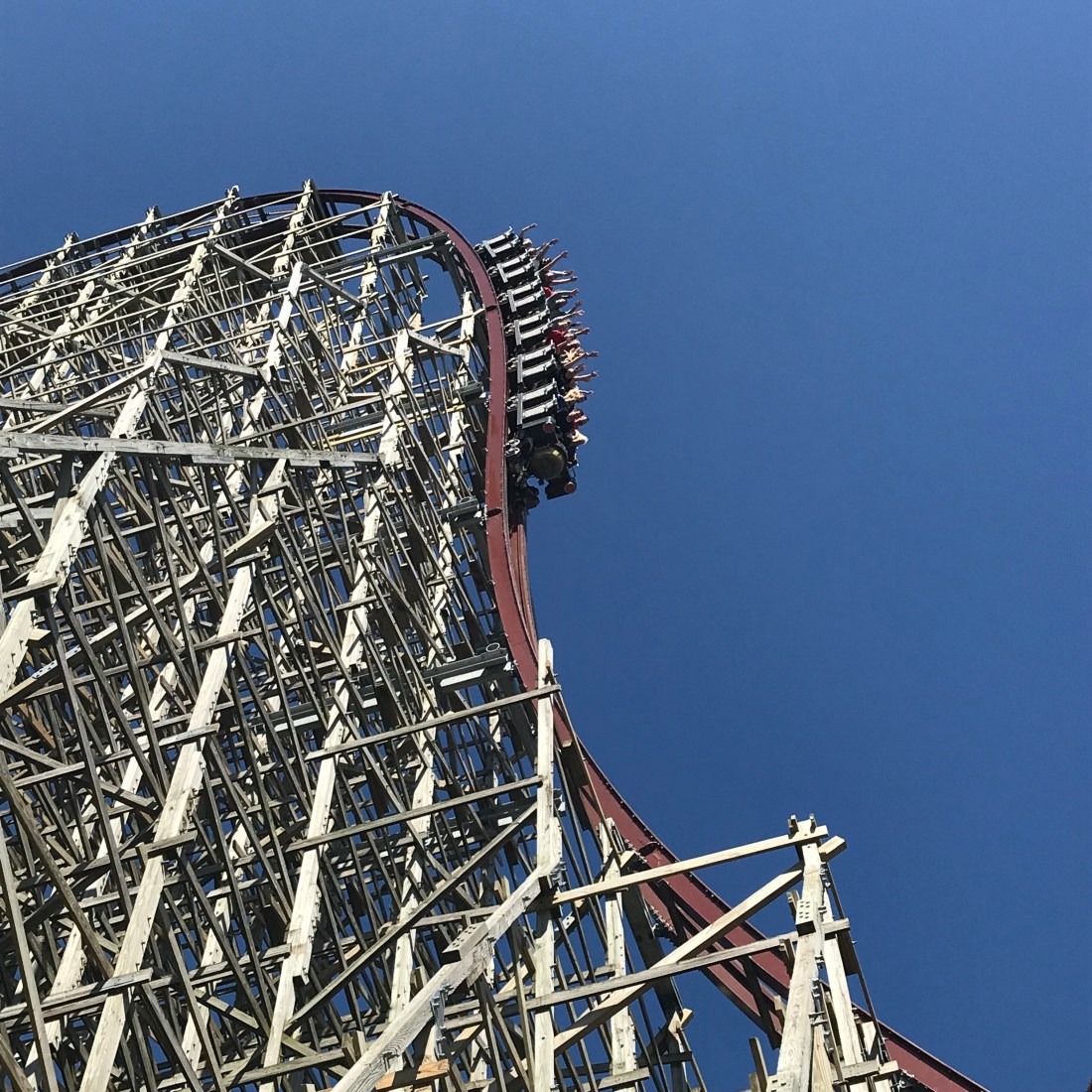
Ok, so we may have been spoiled here, but having access to a full-on coaster park like Clevelands’ Cedar Point will genuinely be missed. New Zealand’s “best” park, Rainbow Springs, has all of the excitement of your average country fair attractions by contrast.

Steel Vengeance at Cedar Point
#9; Bike Night at Quaker Steak & Lube

This one confused many of our local friends for its seeming banality or everydayness, but watching all the bikers roll in on a Thursday night, in full regalia, was a real sub-cultural point of difference.

#10; Streetside City Services

Once again, some spoiling may have happened here, and the Avon hard fill days, curbside leaf & lawn clipping collection & branch grinding will be well and truly missed.

Junior Ranger Report Team

Sometimes you wonder what is going through your kids heads. As part of this journey we have asked Josh and Scott to journal their perspectives and experiences. Here is a collection from the first month.

JOSH (11)

First, we went on a 4 hr drive to Chicago and stayed at Rod and Dianes’ house and went to SuperDawg for dinner. Then we went to Bill and Jackies’ house and rode the old fireboat that their son had bought and me and Scott opened a bar and served wine and champagne. Then we drove to Badlands NP and became junior rangers. We also went hiking and climbing, and the campsite was great too. After our two day stay at the Badlands National Park we set off to Custer State Park and me and Scott and other kids built a massive fort out of logs and stone and we had a war and it was lots of fun.

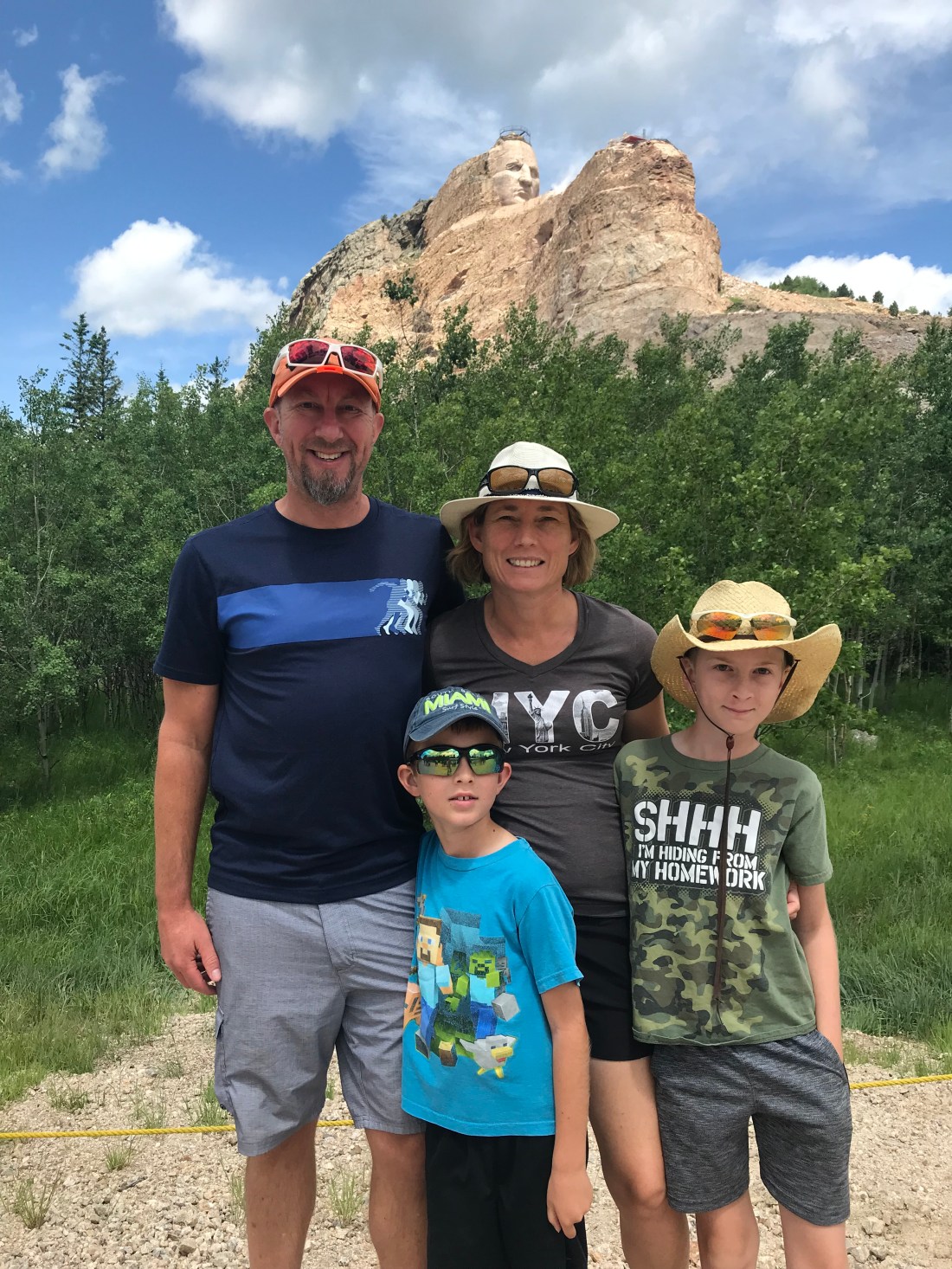
The next morning we went to see the Crazy Horse Indian hero memorial, that only one family was building. It is a huge memorial, much bigger than the Mount Rushmore faces. We went on a bus tour and the guide was funny. After that we went to Mount Rushmore, saw the presidents faces, did the junior ranger papers and did a ranger led talk about how Mount Rushmore was built, which was interesting. Afterwards we drove to Devils Tower. We went on a walk around the tower and climbed the base of the tower. We also saw people climbing the tower up to the top.   After we were done with Devils Tower we drove to the local Walmart store to stock up on food.

We spent a night in a campsite in the mountains and saw a big Moose, then we drove off to Yellowstone. About two minutes after we drove off we came across a herd of cows blocking the road. It was awesome. After the road block cleared we continued our drive to Yellowstone. When we arrived the first thing we saw was heavy machinery cutting down trees and building new roads – in a protected wildlife area!

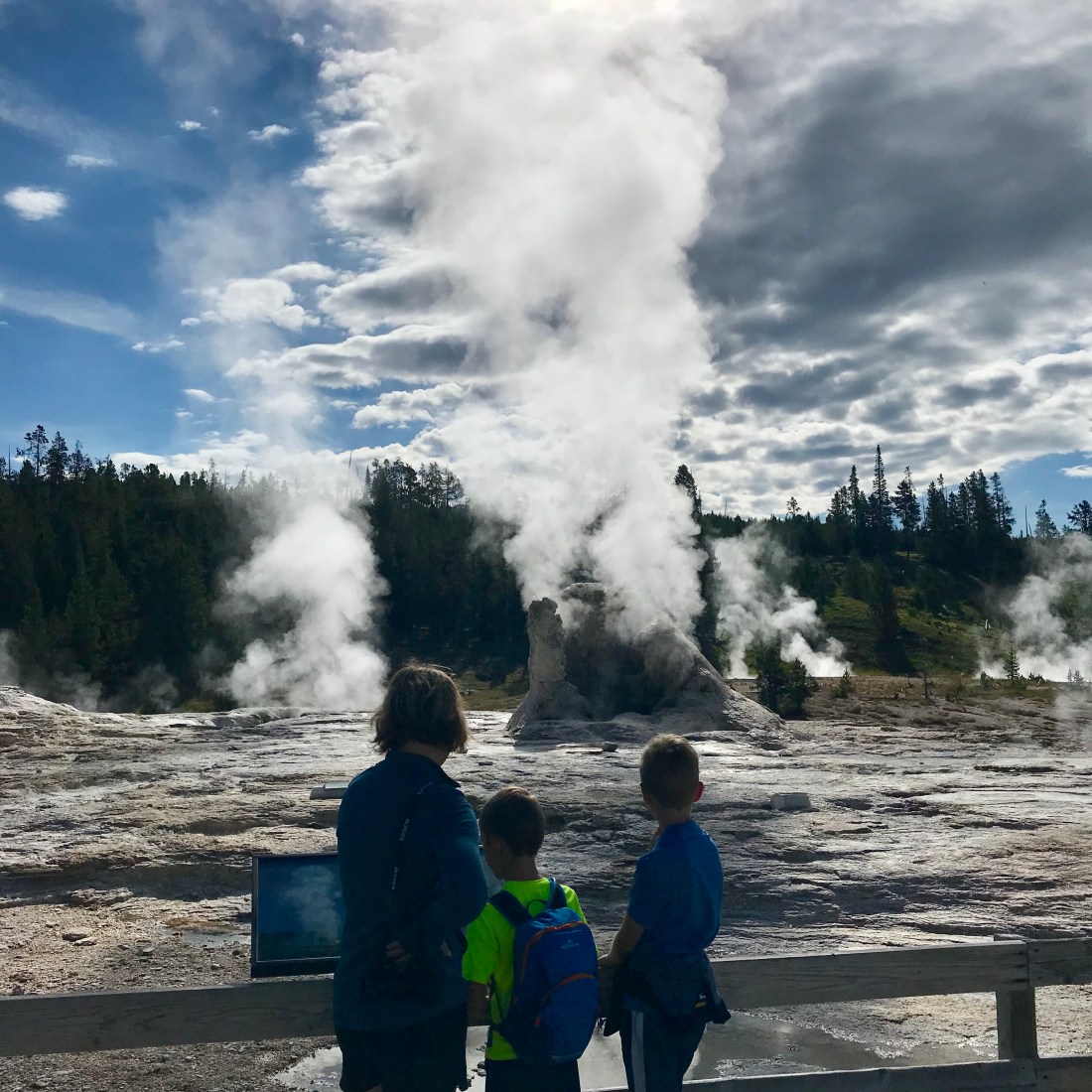
When we arrived at the campsite we went to a geyser field and saw two Elk and hot springs. The next day we saw about 300 Buffalo (in herds), 10 Elk, 3 Marmots, one Black Bear and a Partridge in a pear tree. We also saw the Norris geyser basin and some fumeroles. The next day we got woken up at FOUR FOURTY FIVE AM!!!!! by our parents to go see Old Faithful geyser to beat the crouds..zzz..ZZZZZ. We got there and watched Old Faithful erupt FIVE times in a row and explored the rest of the upper geyser basin and the lodge. And that’s the end of our Yellowstone adventure.

SCOTT (7)

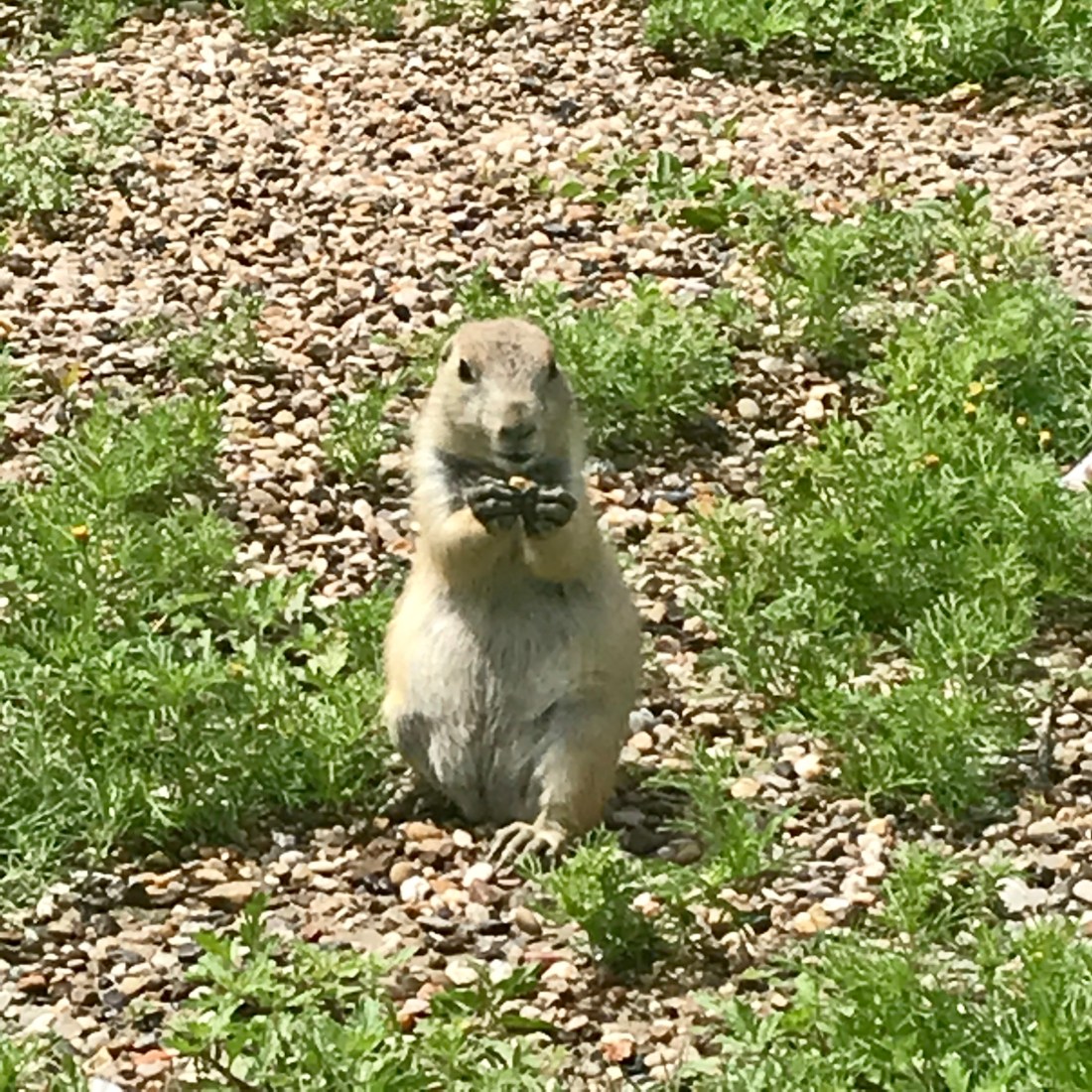
The first place we stayed at was Grumpy Cat’s house. At Grumpy Cats house the cat didn’t let mum down the stairs. The next day we went to the Badlands. At the Badlands we went to a prairie and I got so tired that I almost fell over. I liked the climbing, and I liked the Prairie Dogs, and a bunch of other stuff like the hills.

One morning Josh forgot to put the toilet seat down and his towel fell into the toilet! On the road we saw a ton of cows and one of them pee’d. We also went down a mountain side and the brakes almost exploded!

We went to see some geysers and one of them erupted and went “Kaboom!!!”. After we arrived at Yellowstone, we went to a geyser field. We went to see more geysers and Josh saw a bear from the side of the road. We saw Bison, and more Bison and more Bison and more Bison and, well, you get what I mean. We got up at 4:45AM (!) to beat the crowds at Old Faithful.

The Tectonic Tetons

Most people like a bit of drama in their lives, secretly loving the occasional workplace feud, family discontent or daily first-world crisis. Our brains get buzzed with dopamine driven reward cycles that energise us like a short circuiting battery.

Arriving at the Grand Tetons redefines what true drama really is; behold, Beethoven’s 5th symphony sculpted in stone.

The irony here is that the stunning facade of the Tetons are born out of extreme violence, a spectacular example of pure vertical sheer that occurs when two directly opposing tectonic plates crash head on into each other. The towering granite peaks are in some places separated by an astonishing 30,000 feet from the corresponding rock layers on the lower Jackson Hole valley floors and substrates. But the presiding emotion here is not one of aggression or violence, but of peaceful awe.

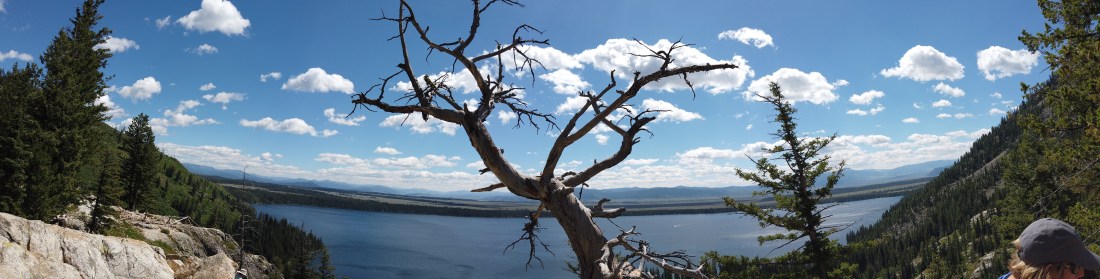
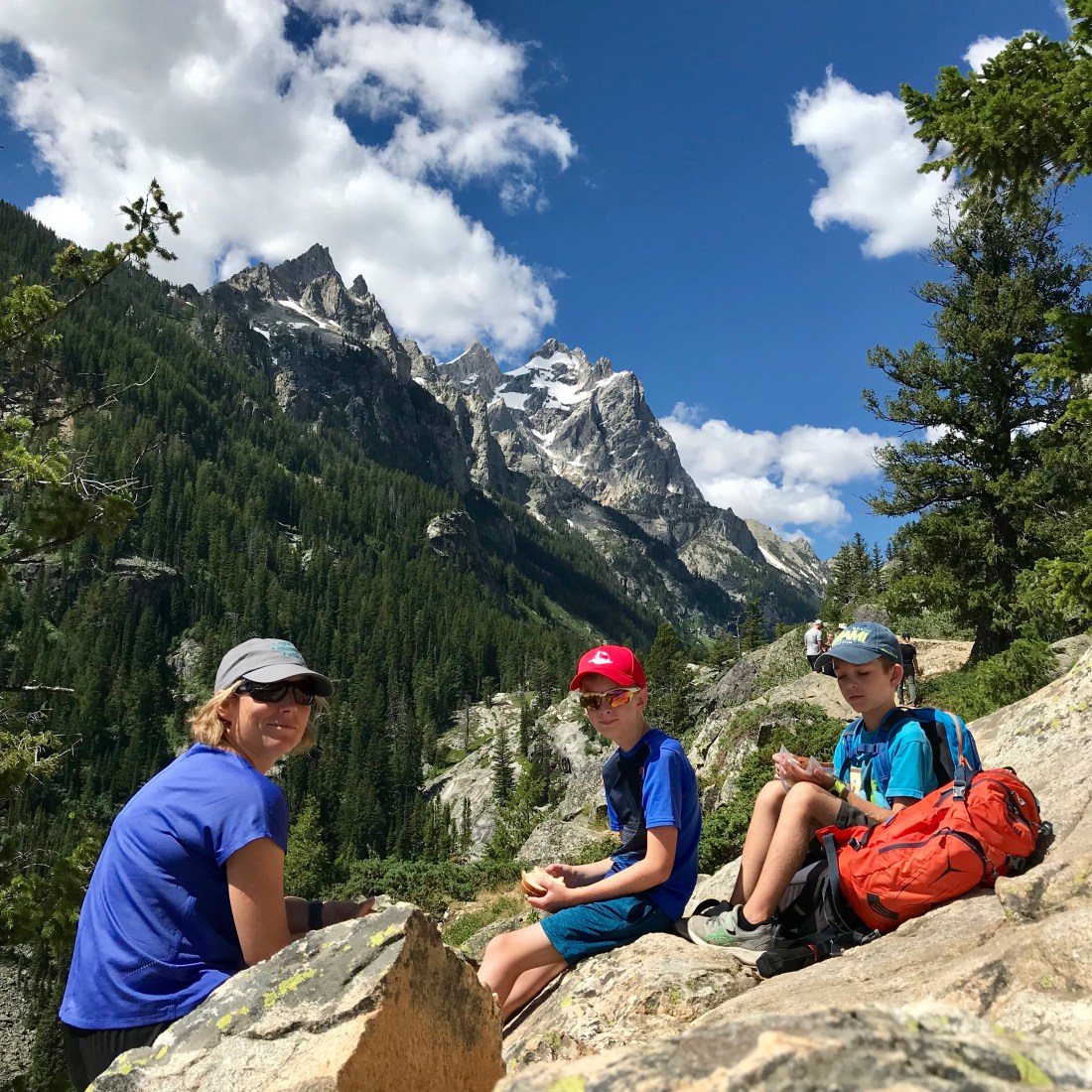
Lycra suited cyclists whizz serenely against the cinematic backdrop, their hearts and legs gaining additional power from the flowing panoramas. Although busy, the park is not nearly as jam packed as the neighbouring Yellowstone. We head from our camp beside Jackson Lake for Jenny Lake. A quick 10 minute ferry shuttle lands you on the toes of the towering Tetons, with plenty of spectacular hikes branching out from the jetty. The track up to Inspiration Point climbs steadily and surely up the banks of Cascade Creek, briefly deposits you at Hidden Falls, before pivoting you around to 180 degree views of the lake and sagebrush hued plains stretching out for miles at your feet.

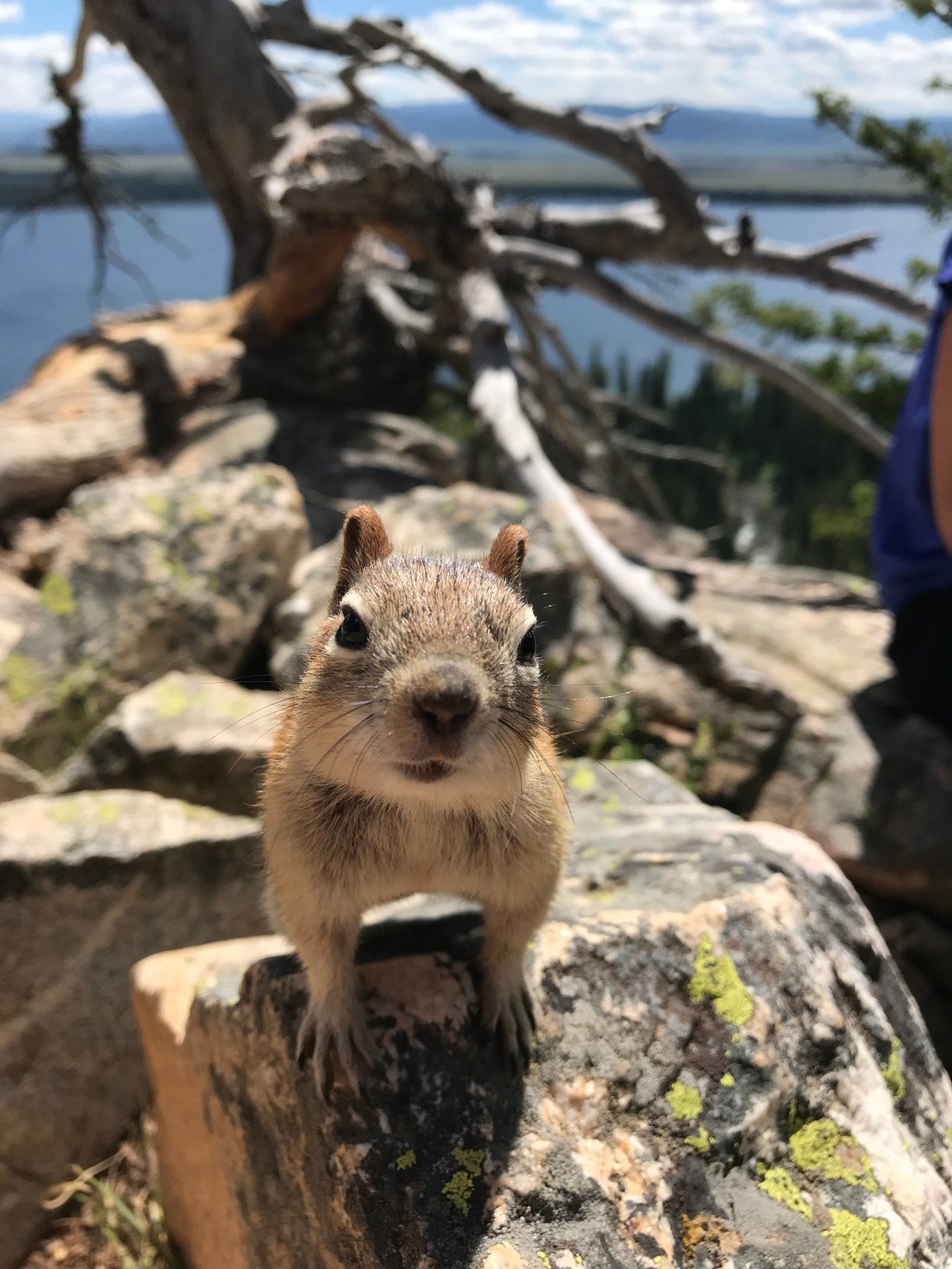
The locals are friendly, perhaps a little too friendly, as they try every trick in the Chipmunks Almanac to cheat you out of your well deserved lunch. Glance westward, and you see the looming shoulders of Teewinot Mountain, with South, Middle and Grand Teton huddled behind like a gargantuan rugby scrum packing down.

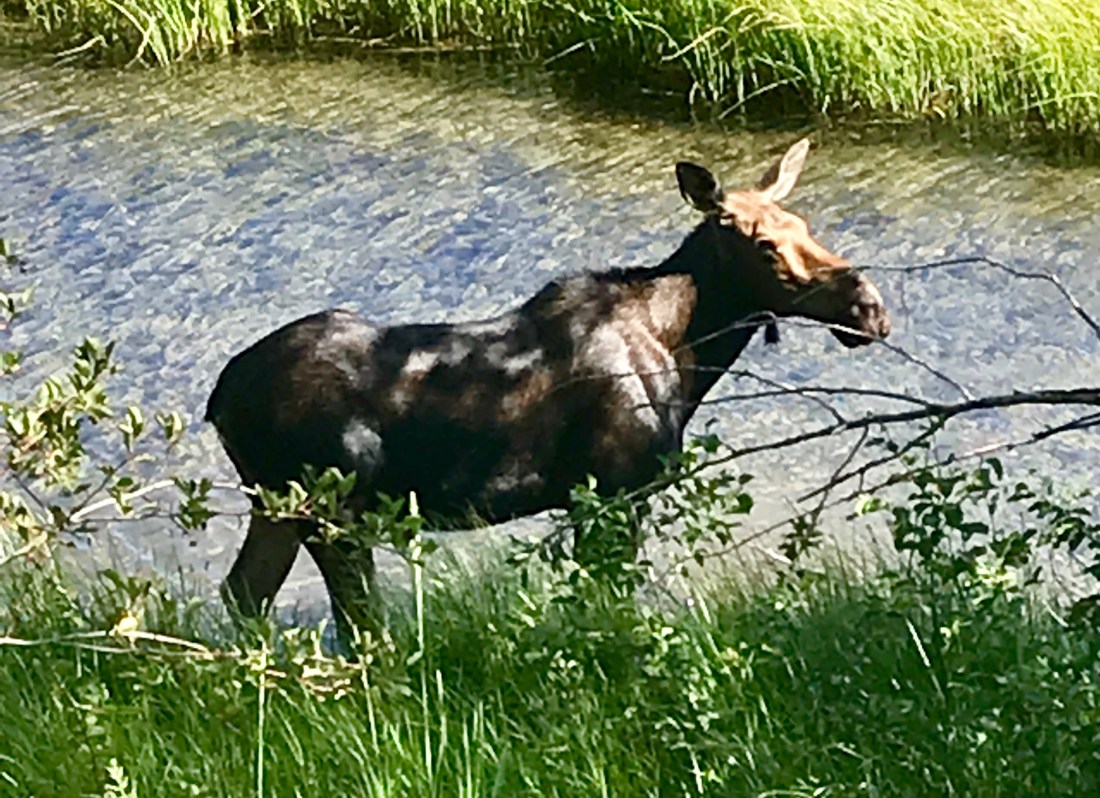
For a switch of scenery, we drive the loop through the charming resort town of Jackson and head back north on the quieter, more rustic Moose-Wilson Road. We didn’t meet any Wilson’s, but an obliging female moose entertained us as she grazed on the creekside vegetation. Lastly, we decide to further reward (and exhaust!) the kids with a side trip up to the Phelps Lake and Death Canyon overlook.

Returning to camp, with white tail deer and red foxes sauntering through your site, it’s easy to imagine that perhaps you are captured in the National Parks emblem itself, like some mystical tourist trap snow-globe. It’s little wonder then that these jagged peaks are to be found immortalised as the background of decades of Western movies, adding the dramatic to the drama unfolding on the flickering silver screens.

Extra Points

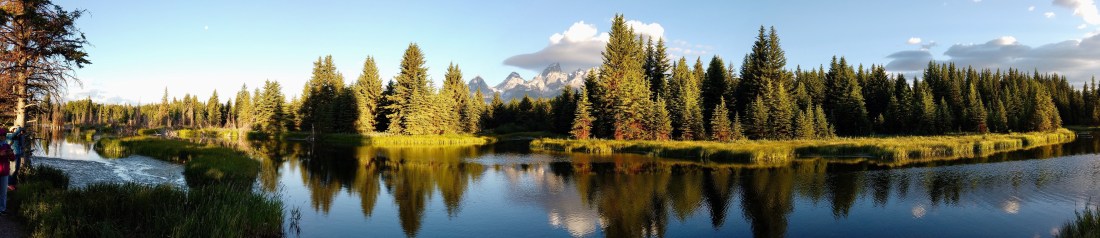
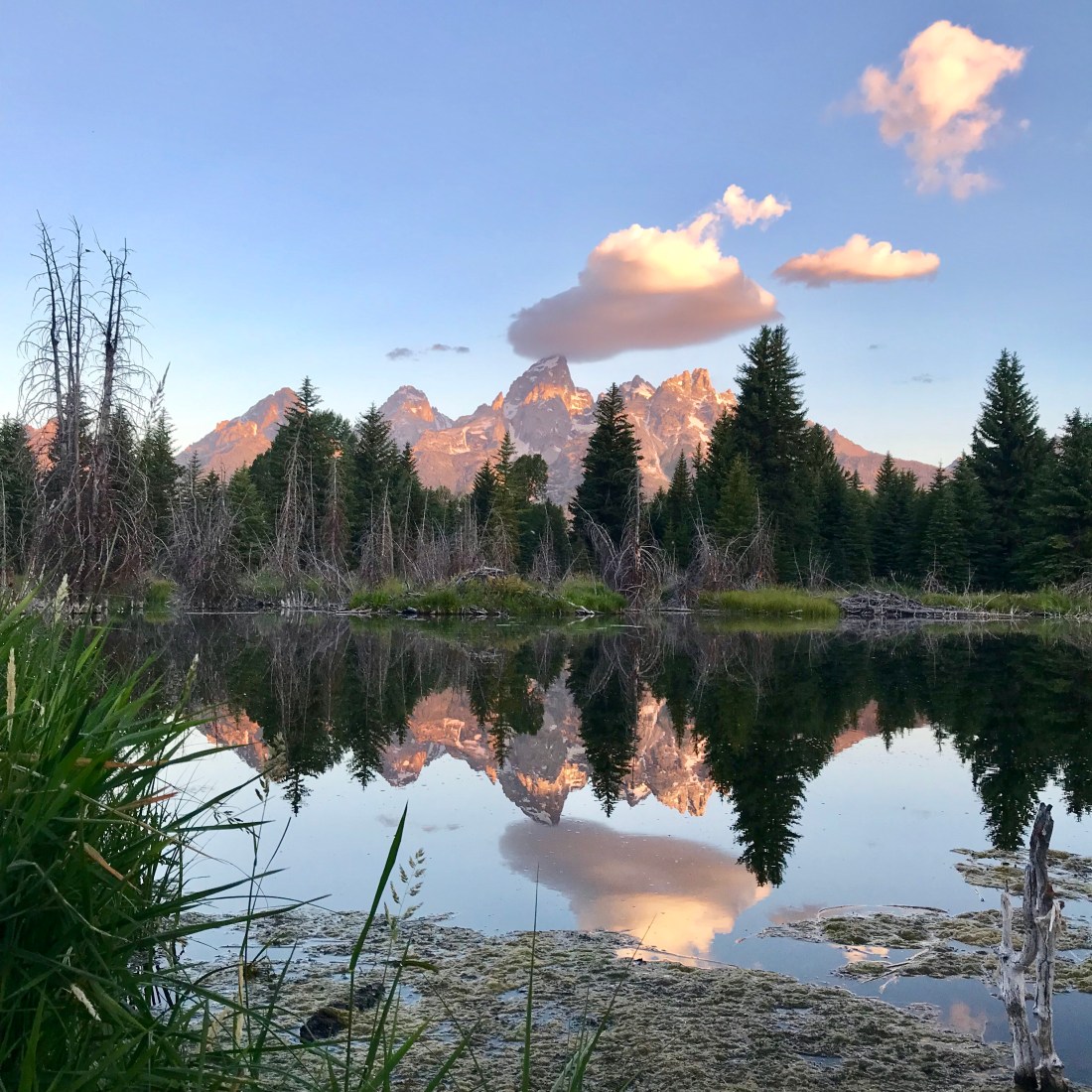
Some of us, okay, I admit it … just one us, thought it would be worth the extra effort of a pre-dawn start the next day, with a drive down to Schwabacher Landing to witness the Technicolor 3D spectacle of the Tetons being lit at first light. A motley crew of photographers, both serious and rank amateurs, huddled in the cool mist looking for the killer shot. Whether we succeeded or not with film or CMOS, the experience of watching these rugged peaks being painted in pinks, red and golds is a moment well worth losing some sleep over.

Binary America

Red. Blue.

Black. White.

Right. Wrong.

One of the challenges of adapting to life in America is learning how to cope with the cultural difference that is forceful argument. Many Americans are not shy of letting you know exactly what is on their minds; all of it, right now! Political opinions may be an inherited family trait (or obligation?) and finding reason and balance in bipartisan politics and discussion can sometimes be a trying exercise.

As (mostly) neutral observers this can often be amusing to observe, sometimes uncomfortable, and sparadically threatening. At times, it can lead you to wonder if America is becoming conditioned to viewing argument as a combative sport; two heavyweights slugging it out in search of an ego boosting knockout blow? News coverage can verge on being instruments of highly biased propaganda that further entrench views and divisions. Impartiality and seeking middle ground has come to be seen as a sign of weakness within the tribalism that is stoked in these flames.

A North Going Zax & South Going Zax exchange views on the correctness of their life choices. Dr Seuss.

When you step away from the current cacophony, and read the words of founding fathers, or watch the scratchy black and white footage of romanticised era’s long past, you can wonder what prior generations would think of the present. Would they be lamenting the lost art of debating the issue without disparaging the person?

The senseless violence that was wreaked upon the mosques in our hometown of Christchurch in New Zealand earlier this year profoundly affected us here half a world away; a cautionary tale of what can happen when unchecked thoughts become unbridled hatred. We must again learn that argument should be a structure that seeks shared principles as foundations, and adds different floors that build out and upon the diversity of opinion.

Challenge yourself to spend time to explore the views that others have. Perhaps, just perhaps, they can see some landmark or feature that is obscured from your vantage. Seek the panorama. Don’t dwell on any one vista. A television constructed of only black and white pixels (or potentially red and blue) cannot portray a vision of color and complexity. Don’t be a pixel stuck on the one chromatic. The natural visible spectrum has seven observable colors that combine to create millions of distinct tones.

Find time to paint yourself a new hue. You’ll soon find that the inside of your head starts to look more Sistine Chapel than monochrome.